







Brake Innovation in the Euro 7 Era: A Breakthrough with Green Coatings—Luoyang Jinlu Makes Its Debut at the 2026 ChinaBrake Brake Industry Conference
Classification: Company News
Visits:
【Summary Description 】 As automakers worldwide race ahead on the path to carbon neutrality, a previously overlooked source of pollution is quietly coming into focus: with the full implementation of Euro 7 emission standards, vehicle exhaust control has reached the limits of current technology, while brake‑wear particulates—accounting for 15% of urban PM2.5, according to EEA data—have emerged as the next frontier in environmental compliance. The regulatory sword has already been drawn: a strict dust‑emission threshold of ≤7 mg/km not only marks a critical line between survival and obsolescence for the industry but also opens the door to a multi‑billion‑dollar technological blue ocean. At this juncture, global innovators are converging on solutions to break the impasse: how can we safeguard the essential safety of braking systems while silencing airborne metal particles, achieving a harmonious coexistence of performance and environmental stewardship?
2026
Europe 7-Era Brake Innovation: A Breakthrough with Green Coatings Arrives
Luoyang Jinlu Makes Its Debut 2026 ChinaBrake
China Brake Conference
As automakers worldwide race ahead on the path to carbon neutrality, a previously overlooked source of pollution is quietly coming into focus. With the full implementation of Euro 7 emission standards, vehicle exhaust control has reached the limits of current technology—yet brake‑wear particulates, accounting for 15% of urban PM2.5 (according to EEA data), have emerged as the new frontier of environmental compliance. The regulatory sword has already been drawn: a strict dust‑emission cap of ≤7 mg/km not only marks a critical threshold for industry upgrading but also opens the door to a multi‑billion‑dollar technological blue ocean. At this juncture, global innovators are converging on solutions: how can we safeguard the intrinsic safety of braking systems while silencing airborne metal particles, achieving a harmonious coexistence of performance and environmental stewardship?
From June 3 to 5, 2026, Luoyang Jinlu Cemented Carbide Tools Co., Ltd. will make a major appearance at the 2026 ChinaBrake Brake Industry Conference, showcasing its full range of brake‑coating products at Booth 8039 in Hall E4. The company will present industry customers with a one‑stop solution for automotive brake‑disc coatings, leveraging cutting‑edge technology to support the sector’s compliance‑driven upgrade.

Professional automotive brake disc coating powder
Manufacturers and Service Providers
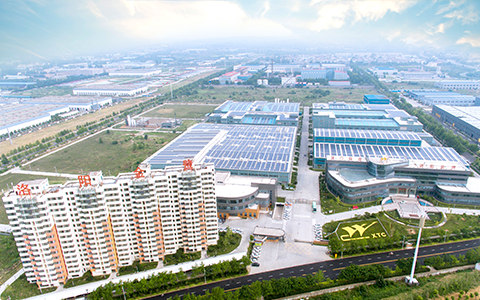
The company has built an intelligent production line capable of producing 500 tons per year of wear‑resistant coating powder for automotive brake discs and 1,000 tons per year of alloy powder, ensuring efficient fulfillment of global bulk orders. Its products have passed bench‑test evaluations at several major European OEMs, demonstrating industry‑leading technical reliability and performance while fully complying with Euro 7 regulatory requirements.
Leveraging 30 years of expertise in hard‑surface material development, supported by a highly qualified team and cutting‑edge management practices, the company is dedicated to delivering green, low‑dust emission solutions for the automotive braking industry, efficiently helping customers meet the stringent requirements of Euro 7 and future China VI standards.

Core Product
The Luoyang Jinlu brake disc eco‑friendly coating solution features a dual‑layer design, utilizing environmentally benign coating materials that comply with the EU REACH regulation and align with the automotive industry’s green development trend.

GPT30FC-1 (TiC-FeCr reinforcement phase)
● Used as a hard-phase reinforcement, it is often combined with matrix materials such as 430L and 316L to form the friction‑surface layer of brake discs, delivering outstanding wear resistance, corrosion resistance, and thermal stability.
● Produced via a sintering‑agglomeration process, it exhibits high sphericity, excellent flowability, and high powder‑delivery efficiency.
● The cladding process has a wide process window, is crack-free, and exhibits excellent wear and corrosion resistance.
● Environmentally and human‑friendly, compliant with current and future regulatory requirements (REACH).

GPS430L-4 (Stainless Steel Primer)
● Used as a transition layer and as a matrix material containing hard phases, it can be employed to fabricate cladding layers with excellent corrosion resistance.
● Produced via inert-gas atomization, it exhibits high sphericity, excellent flowability, and high powder‑delivery efficiency.
● The cladding process has a wide process window, is crack-free, and exhibits excellent corrosion resistance.
● Environmentally and human‑friendly, compliant with current and future regulatory requirements (REACH).

This appearance at the 2026 ChinaBrake Brake Industry Conference serves as a vital platform for Luoyang Jinlu to showcase its technological prowess and product advantages, while also providing a key opportunity to forge deeper connections with industry partners and jointly explore innovative pathways for brake technology in the Euro 7 era. Looking ahead, Luoyang Jinlu will continue to deepen its expertise in hard‑facing materials, leveraging technological innovation as its core driver to continually refine coating solutions for automotive brake discs, uphold green and environmentally friendly principles, and support the compliant upgrading and high‑quality development of the global automotive braking industry. Together with industry peers, we are committed to shaping a new industrial future aligned with the goal of carbon neutrality. We warmly invite industry partners from all sectors to visit Booth 8039 in Hall E4, where you can experience our premium products firsthand, discuss collaboration, and embark on a new journey together!


Multi-line text content element
HTML language content can be parsed after rich text content is bound to data
Related News


08-05
2026


07-23
2026

07-21
2026

LUOYANG GOLDEN EGRET GEOTOOLS CO.,LTD. willing to share with you and grow together!
Contact Us
ADD:No.68, North Binhe Road, National High&New Tech Industry Zone, Luoyang,Henan,China
Telephone:+86-0379-61101002
Email:geotools@cxtc.com
Follow Us

MESSAGE
SAF Coolest v1.3.1.2 设置面板 AOBSD-ZWHJ-QXZQE-ZVX
无数据提示
Sorry, the current column is being updated, please look forward to it!
You can view other columns or returnHome Page